AZEC Aims for Decarbonization and Economic Growth in Asia (Part 2)
Advanced Projects Involving Japanese Companies
(Provisional translation)
(English ver.) 2026-06-12
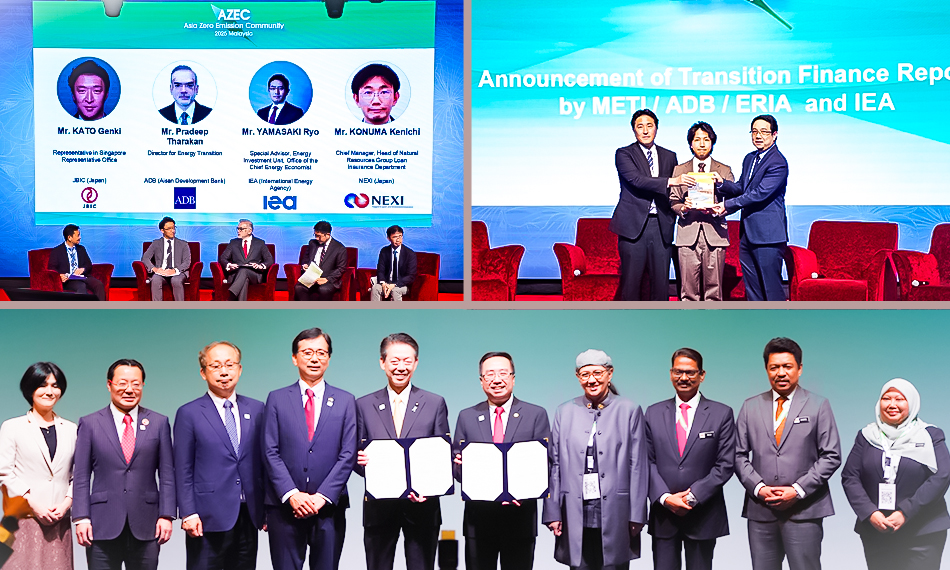
In October 2025, the 3rd Ministerial Meeting and the 3rd Leaders’ Meeting of the Asia Zero-Emission Community (AZEC) were held in Malaysia. Part 1 outlined the achievements of the 2025 AZEC meetings, which marked the start of full-scale implementation of the AZEC initiative. Part 2 here introduces various projects in different sectors being undertaken by private companies and others under the AZEC framework.
AZEC’s Achievements in the Power, Transportation, and Industrial Sectors
At the 3rd AZEC Ministerial Meeting, new achievements and initiatives toward decarbonization were reported (AZEC Aims for Decarbonization and Economic Growth in Asia (Part 1): Achievements in 2025). AZEC is actively promoting projects that foster cooperation among the governments, companies, and financial institutions of Japan and AZEC partner countries. At this Ministerial meeting, approximately 50 new MOUs (Memoranda of Understanding) were announced, bringing the total number of projects announced at Ministerial and Leaders’ meetings to date to approximately 540.
To date, AZEC has been promoting decarbonization in three sectors—power, transportation, and industry—through the advancement of individual projects and policy coordination. Currently, Japanese companies continue to participate in and work on projects in each of these sectors.
Power Sector: Commercial Use of Ammonia-Fired Gas Turbines
In Southeast Asia, where dependence on fossil fuels is high, it is crucial to advance the decarbonization of thermal power generation in a practical manner. One such approach is the use of ammonia, which does not emit CO₂ during combustion. In Malaysia, through collaboration between IHI and the Petronas Group, efforts are underway to realize a power generation project using ammonia-fired gas turbines, which run entirely on ammonia, with the aim of achieving commercialization.
Ammonia-fired gas turbine (IM270)
Transportation Sector: Joint Study on Building a Sustainable Aviation Fuel (SAF) Supply Chain
Global demand for sustainable fuels is expected to grow across various sectors, including road transport, particularly in Asia. For example, in the aviation sector, Idemitsu Kosan is conducting joint studies with Petronas, Malaysia’s major state-owned oil company, to build and strengthen a SAF supply chain.
Through this collaboration, they aim to establish a distribution and sales network for SAF by conducting feasibility studies on the large-scale procurement of bio-based feedstocks, including non-edible oil feedstocks, as well as safety and stability assessments.
Learn More
Adoption of Renewable Energy and Demonstration of Energy Management in Industrial Parks and Smart Cities
In the Asian region, manufacturing accounts for a large share of the industrial structure. Consequently, efforts are underway to decarbonize industrial parks to facilitate the decarbonization of manufacturing supply chains.
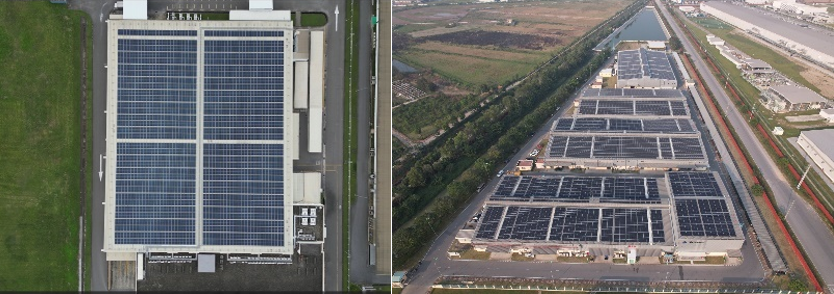
Sumitomo Corporation has installed and operated a renewable energy (solar power) generation facility within the Thang Long Industrial Park in Viet Nam, and plans to adopt solar power generation and energy-saving equipment in the smart city currently under development nearby. Going forward, the company also plans to increase the share of renewable energy using storage batteries and conduct demonstrations of energy management.
Solar panels installed at the Thang Long Industrial Park
Areas of Cooperation Expanded in 2025 to Include Biofuels and Production Processes
While previously announced MOUs had focused primarily on the power sector, including renewable energy, hydrogen, and ammonia, a key feature of the MOUs announced at the 3rd AZEC Ministerial Meeting was the emergence of new areas of cooperation, such as biofuels and the decarbonization of production processes. The following are two representative cases.
Case 1: Biofuels
Biotechnology company Euglena has invested in a project to construct and operate a commercial-scale biofuel production plant in Malaysia, in partnership with Malaysia’s major oil company Petronas and Italy’s major energy company Eni. The plant is scheduled to begin operations in the second half of 2028, and once operational, it is expected to be one of the largest biofuel plants in Asia.
The plant is scheduled to produce SAF (Sustainable Aviation Fuel) and HVO (next-generation biodiesel), and Euglena, which holds a 15% stake, expects to handle approximately 100,000 KL of biofuel annually. The project is garnering attention not only for meeting future demand for sustainable fuels but also for helping advance the decarbonization of the aviation and transportation sectors in the Asian market.
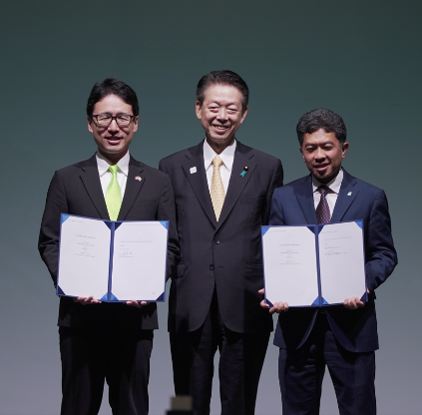
Signing an MOU in the biofuel sector
Case 2: Industrial Fuel Transition
In Laos, the energy company TSB GreenNex signed an MOU regarding a fuel transition project using green hydrogen burners. The project aims to achieve decarbonized alumina refining (green aluminum) by switching the heat source for the calcination process, which refines alumina from bauxite, from the fossil fuels previously used to green hydrogen. Demand for green aluminum is expected to grow globally in the future, presenting an opportunity to utilize Japan’s hydrogen-related technologies.
TSB GreenNex has previously been involved in projects such as solar power generation in Laos and coffee roasting using green hydrogen produced domestically in Laos, helping advance decarbonization in the country.
Signing an MOU in the industrial fuel sector
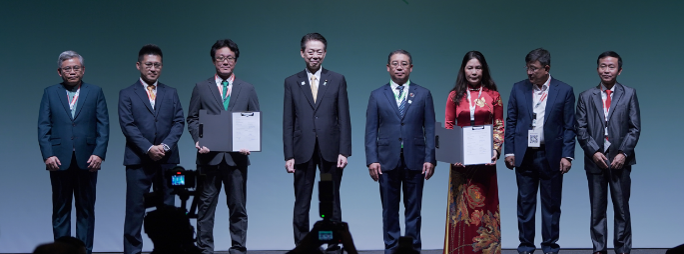
Various other MOUs have also been signed. In Malaysia, Mitsui & Co. plans to undertake CCS initiatives off the southern coast of the Malay Peninsula (CCS Technology (Part 1) Efforts Accelerating at Home and Abroad toward Commercialization of CCS). In Singapore, Mitsubishi UFJ Bank and NEXI (Nippon Export and Investment Insurance) plan to cooperate to expand decarbonization investments in Asia. In Thailand, MinebeaMitsumi will promote collaboration on solar power generation projects utilizing storage batteries.
In addition, Japan-led cooperation projects are being carried out in various forms across Asian countries, ranging from advanced technologies to finance.
Discussion on Challenges in Bilateral Dialogue Frameworks
To support these private-sector initiatives, AZEC is promoting project progress not only through multilateral frameworks but also through dialogue with each of its partner countries.
In Indonesia, the AZEC Japan-Indonesia Joint Task Force, and in Vietnam, the AZEC/GX Promotion Working Team are examining the challenges faced by individual projects and exploring potential solutions. In addition, discussions are underway to advance individual projects through dialogue frameworks with other AZEC partner countries and in bilateral dialogue forums. Some projects have made progress toward commercialization through ongoing discussions with partner governments within these bilateral frameworks.
Bilateral dialogue in Indonesia
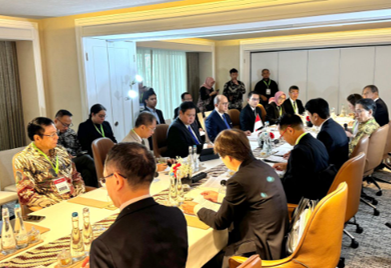
AZEC will continue to work with its partner countries to promote project progress through opportunities such as bilateral dialogues, while aiming to establish rules for transition finance and other areas.
Divisions in Charge
About this article
Global Environmental Affairs Office, GX Policy Group, METI
International Affairs Division, Commissioner’s Secretariat, ANRE
About the Special Contents
Research and Public Relations Office, Commissioner’s Secretariat, ANRE
 The original Japanese text of this article; Click here