“AZEC” Aims for Decarbonization and Economic Growth in Asia: 2025 Achievements (Part 1)
(Provisional translation)
(English ver.) 2026-06-05
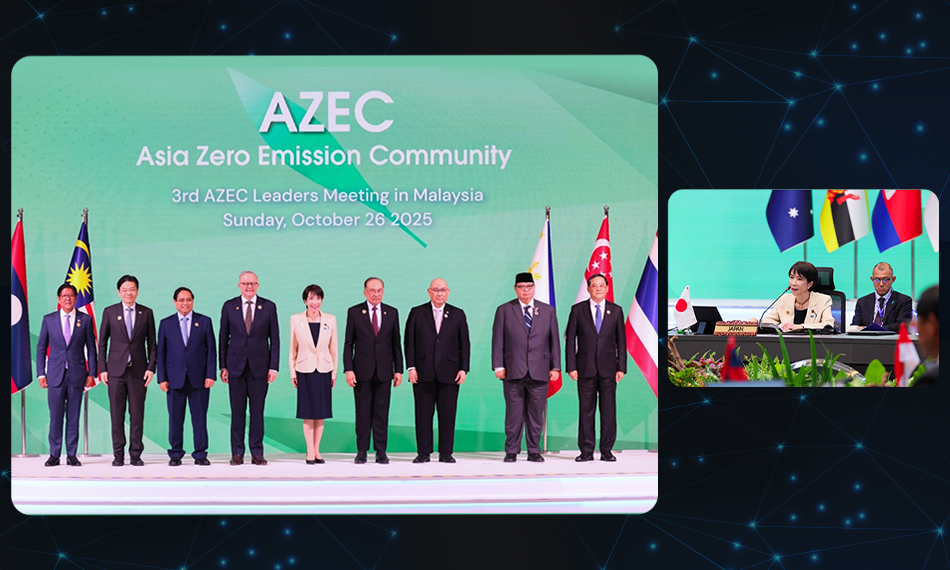
(Source: Cabinet Public Relations Office)
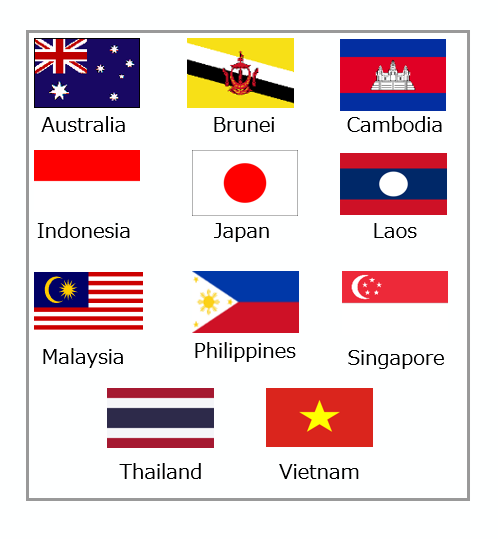
In October 2025, the 3rd Ministerial Meeting and the 3rd Leaders’ Meeting of the “Asia Zero Emission Community (AZEC)” were held in Malaysia. AZEC is a platform established to promote decarbonization in Asia, currently involving partner countries from 11 nations, including Japan, Southeast Asian countries, and Australia. The 1st Ministerial Meeting and the 1st Leaders’ Meeting were held in 2023, followed by the 2nd in 2024, and the initiative has been making steady progress. This article presents AZEC’s achievements in two parts. Part 1 explains AZEC’s activities in 2025, as the initiative moved toward full-scale implementation.
AZEC’s Initiatives Essential for Asia’s Decarbonization
In Southeast Asia, the manufacturing sector accounts for a high percentage of GDP, and the region continues to experience rapid economic growth. Consequently, energy demand is projected to increase in the future. Much of this energy demand is currently met by thermal power generation using fossil fuels (such as coal and natural gas) that emit CO2. At the same time, many countries have declared their commitment to achieving carbon neutrality, and therefore face the difficult challenge of simultaneously meeting growing electricity demand while decarbonizing their economies.
Power Generation Sources by Major Countries
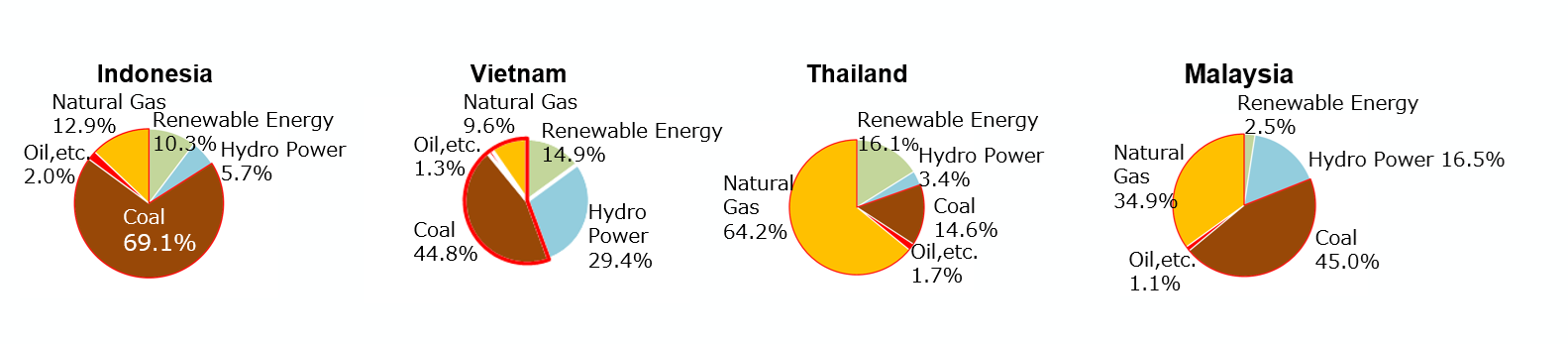
While the use of renewable energy is crucial for decarbonization, Southeast Asia lacks abundant solar and wind resources, meaning the potential for solar and wind power generation is not as high as in Europe and other regions. Furthermore, electricity demand in Southeast Asia is expected to rise significantly in the future due to economic growth and population increase. Therefore, it is necessary to meet electricity demand by following a practical pathway that includes not only renewable energy but also the utilization of existing thermal power plants, taking into account the different circumstances of each country such as land availability and social systems. However, delays in decarbonization efforts also create risks due to losses in terms of global business opportunities. Therefore, it is essential for Asia to advance decarbonization while balancing economic growth with a stable energy supply.
To address these challenges in Asia, AZEC is promoting the energy transition—the shift toward a new, sustainable, and environmentally conscious energy system. In pursuing this initiative, AZEC aims to advance Asia’s decarbonization through practical methods employing various pathways tailored to each country’s different circumstances, utilizing Japan’s diverse technologies and financing systems.
AZEC Partner Countries
Adoption of the “Action Plan for the Next Decade” in 2024
At the 2nd Leaders meeting held in 2024, AZEC reaffirmed its principle of "aiming to achieve net-zero emissions under various pathways" and announced the “Action Plan for the Next Decade.”
The Action Plan is built on three pillars. The first pillar is “AZEC Solutions,” which promotes activities aimed at decarbonization. This includes visualization of greenhouse gas (GHG) emissions, promoting transition finance, emission reductions in the agriculture and forestry sectors, and decarbonization of the transportation sector. The second is to promote concrete projects. Decarbonization projects will be created by utilizing various schemes such as Official Development Assistance (ODA) and the financing schemes of the Japan Bank for International Cooperation (JBIC). The third pillar is the launch of sectoral initiatives in the power, transportation, and industry sectors toward carbon neutrality. The “Asia Zero Emission Center,” which will serve as an intelligent engine to drive these efforts, has also been established.
The primary objective of the “Action Plan for the Next Decade” is to create a virtuous cycle that promotes these three sectoral initiatives—power, transportation, and industry—through the advancement of individual projects and policy coordination.
Full-Scale Implementation of the Action Plan from 2025
2025, the third year since the establishment of AZEC, marked the year for the full-scale implementation of the Action Plan that was adopted the previous year.
At the 3rd AZEC Ministerial and Leaders Meetings, the achievements and efforts to date based on the Action Plan were reviewed. The outcomes included the release of reports on transition finance necessary for a practical energy transition in Asia, prepared by such institutions as the Asian Development Bank (ADB) and the International Energy Agency (IEA), as well as deepening of discussions toward visualization of GHG emissions and promoting high-quality carbon markets through the AZEC International Conference to Develop Carbon Markets (AZEC-DCM).
Learn More
Mechanisms for addressing challenges are also crucial for enhancing effectiveness. The “Economic Research Institute for ASEAN and East Asia (ERIA) “has prepared a progress report summarizing the current status and challenges facing each country’s initiatives. A mechanism has been incorporated whereby the IEA reviews progress and the details of these initiatives. Additionally, the “AZEC Leading Action Forum (AZEC LEAF)” has been established to facilitate the sharing of efforts and challenges at the working level.
Furthermore, under AZEC, private-sector companies are participating in and working on specific projects in cooperation with member countries. New projects have been announced at each meeting to date, and the number of memorandum of understanding (MOUs) announced at the 3rd Ministerial Meeting has reached approximately 50. As a result, the cumulative number of projects announced since the AZEC’s launch has reached approximately 540. The scope of cooperation is also expanding beyond the initial areas of renewable energy, hydrogen and ammonia and CCUS to include bioenergy and the decarbonization of production processes.
To support such initiatives by private companies, Japan is engaging in dialogue with various countries. For example, we have established the “AZEC Japan-Indonesia Joint Task Force,” a platform for cooperating on Indonesia’s decarbonization efforts. In Vietnam, we launched the “AZEC/GX Promotion Working Team” to promote green growth and energy transition, selecting projects aimed at early commercialization. Furthermore, in Thailand, we have launched “AZEC-SAVE (Smart and Advanced Value-chain for Environment),” a framework to support energy conservation in industry. In addition, we are holding discussions to advance individual projects taking such opportunities as bilateral dialogues with each country.
Launch of AZEC-SAVE
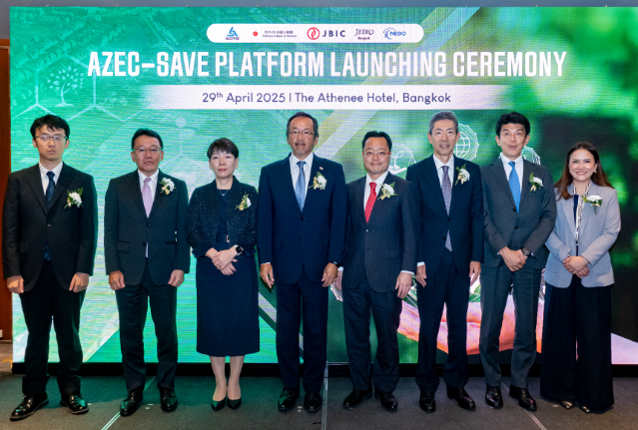
(Source: Japan Bank for International Cooperation)
Moving forward, AZEC plans to focus on promoting tangible projects led primarily by private-sector companies from Japan and Southeast Asia, with government support.
In Part 2, we will introduce specific projects involving Japanese companies that are progressing within the AZEC framework.
Learn More
- Asia Zero Emission Community (AZEC)

- Asia Zero Emission Community (AZEC) – Overview―AZEC: Empowering Action to Zero―

- Asia Zero Emission Community (AZEC) – Specific topics―AZEC: Empowering Action to Zero―
Divisions in Charge
About this article
Global Environmental Affairs Office, GX Policy Group, METI
International Affairs Division, Commissioner’s Secretariat, ANRE
About the Special Contents
Research and Public Relations Office, Commissioner’s Secretariat, ANRE
 The original Japanese text of this article; Click here