International Conferences in Osaka on Sustainable Fuels and Hydrogen Held Together with an Expo Site Visit
Sharing Japan’s Efforts with the World
(Provisional translation)
(English ver.) 2026-01-23
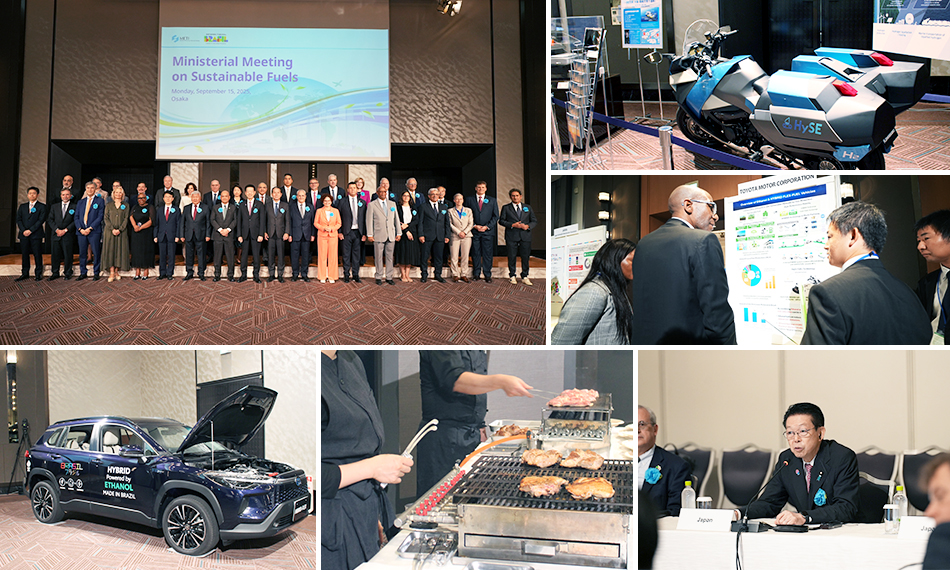
Green Transformation (GX) is one of the major efforts Japan is advancing to reform its entire economic and social system. It aims to transform the fossil fuel-centered industrial and social structure that uses coal and oil to a new structure relying on clean energy with no CO2 emissions. Japan is advancing the development and utilization of various next-generation energy sources and decarbonization technologies. International cooperation and public-private collaboration are essential for the popularization of such energy sources and technologies. To this end, on September 15, 2025, two international conferences were held in Osaka, the venue of Expo 2025 Osaka, Kansai, Japan. These were the Ministerial Meeting on Sustainable Fuels and the 7th Hydrogen Energy Ministerial Meeting. These two meetings shared information with the world about the diverse efforts Japan is advancing regarding next-generation energy sources. This article (in two parts) presents an outline of the meetings.
The first Ministerial Meeting on Sustainable Fuels was held to discuss next-generation fuels such as biofuels and e-fuels
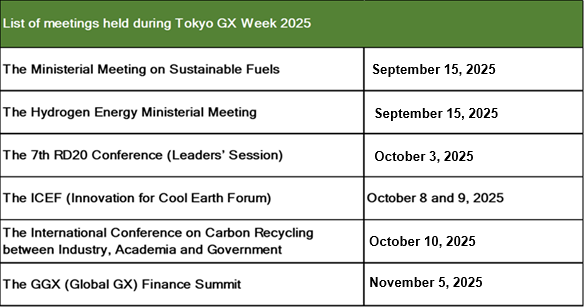
In autumn every year, several GX-related international conferences are held in Japan during the period referred to as Tokyo GX Week. The two meetings were held as events during Tokyo GX Week 2025.
The Ministerial Meeting on Sustainable Fuels, which was held for the first time, focused on the theme of sustainable fuels to be used in various sectors such as aviation, maritime and road transport, and industry.
“Sustainable fuels” refer to next-generation sustainable fuels with less CO2 emissions compared to conventional fuels. They include biofuels, hydrogen, ammonia, e-fuels, and e-methane.
In the aviation sector, sustainable aviation fuel (SAF), such as bio jet fuel, is being introduced.
You can find more information on SAF in the following article.
In the road transport sector, in addition to biofuels such as bioethanol and biodiesel, e-fuels, which are produced by synthesizing CO2 and hydrogen, are expected to be introduced.
Toward achieving net zero, it is crucial to expand the production and utilization of sustainable fuels. The Ministerial Meeting on Sustainable Fuels was co-hosted by Japan and Brazil, as part of the Initiative for Sustainable Fuels and Mobility (ISFM) that was launched during the Japan-Brazil summit in May 2024. (Brazil chaired COP30, which was held in November 2025.)
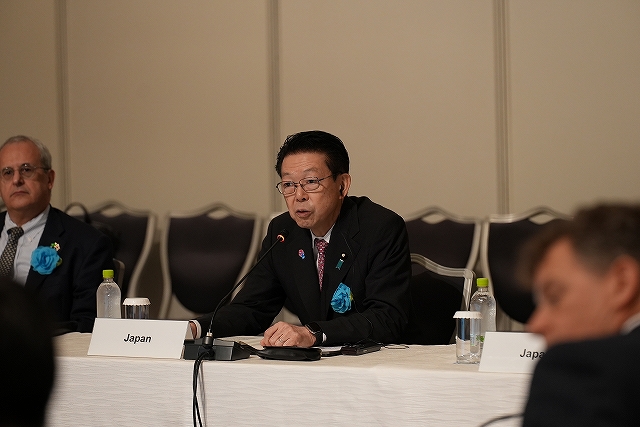
Mr. Muto, Minister of Economy, Trade and Industry
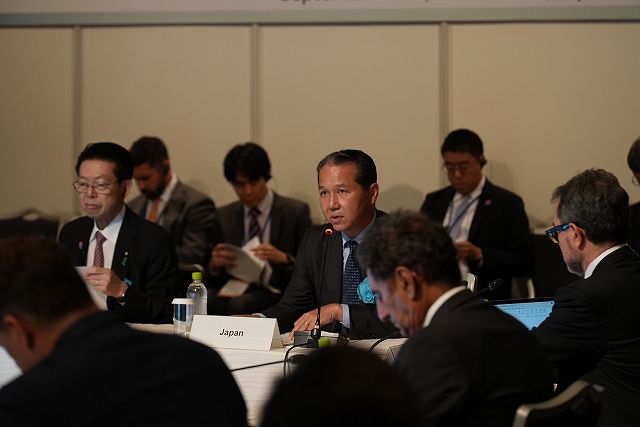
Mr. Murase, Commissioner, Agency for Natural Resources and Energy
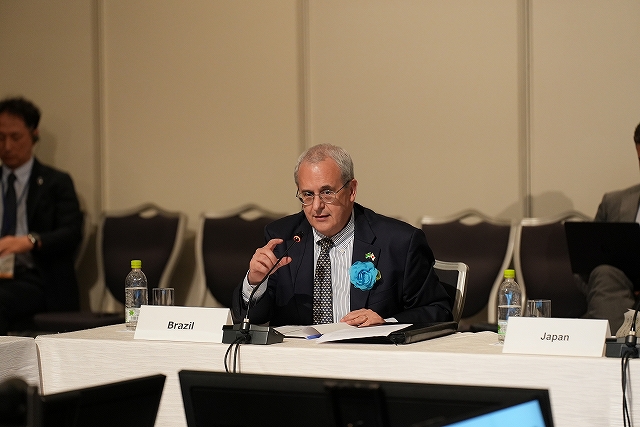
Mr. Côrtes, Ambassador of Brazil to Japan
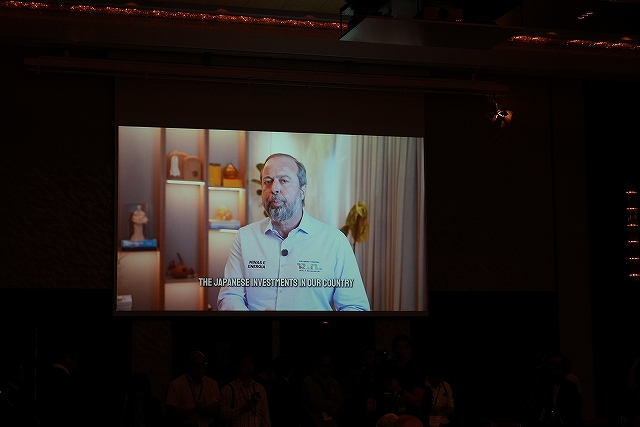
Mr. Silveira, Minister of Mines and Energy posting a video message
The meeting brought together delegates from 34 countries and organizations from around the world. They agreed on the necessity of taking a multi-pathway approach toward achieving carbon neutrality and shared the recognition that sustainable fuels should play a critical role in this context. Sustainable fuels will provide multiple benefits from the perspectives of contributing to energy security, economic growth and employment, not to mention reducing GHG emissions. Sustainable fuels can be utilized in a cost-effective way by using existing infrastructure. Furthermore, they are relatively easy to transport and store, thereby contributing to disaster relief and energy security.
- Benefits sustainable fuels can provide
-
 Lower GHG emissions
-
Energy security
-
Economic growth
-
Employment
To expand the production and utilization of sustainable fuels, we must make concerted efforts in various sectors, such as aviation, shipping, road transport and industry, while considering the different circumstances and starting points of respective countries. These efforts include the formulation of goals and roadmaps, demand creation through public procurement, transparent rulemaking for gauging GHG emissions and reductions, and support measures for R&D and innovation conducive to cost reductions of main technologies and infrastructure, as well as establishing accessible financing mechanisms to expand the utilization of sustainable fuels in emerging and developing countries.
In advancing efforts toward expanding the supply and use of sustainable fuels, it is necessary to take into consideration the international commitments made in each field such as ones made by the International Civil Aviation Organization (ICAO) and the International Maritime Organization (IMO) in the aviation and shipping sectors respectively. Furthermore, one of the most important outcomes of the meeting was to share the recognition that it is important to advance decarbonization in the road transport sector by combining sustainable fuels with high-performance mobility equipment.
At the meeting, the IEA outlined its new report titled Delivering Sustainable Fuels–Pathways to 2035 (officially published later on October 13, 2025). The presentation by the IEA indicated that the production and use of sustainable fuels will be expanded globally by at least four times by 2035 from 2024 levels. Representatives of countries and organizations from around the world discussed necessary initiatives and cooperation with a view to making the IEA’s outlook a reality. The start of private sector initiatives has also been announced. For instance, the Japan Automobile Manufacturers Association, Inc. (JAMA) issued a joint statement with the Brazilian Association of Automotive Vehicle Manufacturers (ANFAVEA) toward expanding the use of sustainable fuels.
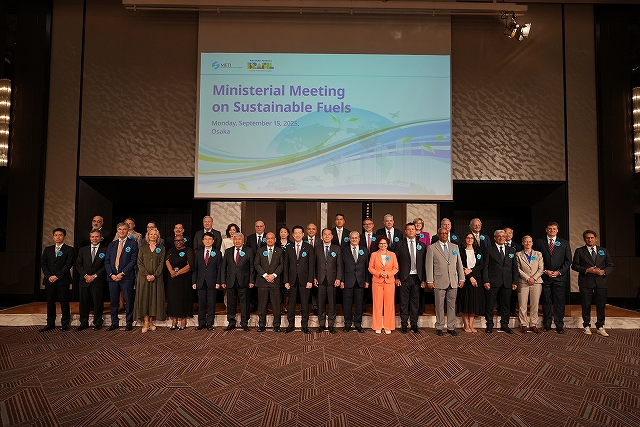
You can find more information in the following documents.
- Ministerial Meeting on Sustainable Fuels and Seventh Hydrogen Energy Ministerial Meeting Held
- Co-Chairs’ Summary on the Ministerial Meeting on Sustainable Fuels
Japan displays technologies such as a biofuel hybrid vehicle, hydrogen motorcycle and hydrogen cooker
As a sideline to these two meetings, a wide range of items were displayed at the venue to demonstrate Japan’s technologies for next-generation energy, including a flex-fuel hybrid vehicle and hydrogen-powered motorcycle.
A flex-fuel hybrid vehicle, produced by Toyota Motor Corporation in Brazil, can run with both gasoline and bioethanol. It reduces fuel consumption with a hybrid system that also uses electricity. A hydrogen-powered motorcycle, manufactured by Kawasaki Motors, is equipped with a hydrogen internal combustion engine. The venue displayed actual working models of these two items.
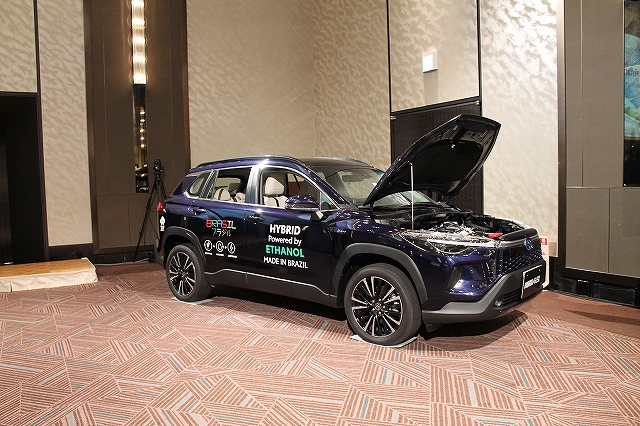
Flex-fuel hybrid vehicle produced by Toyota Motor Corporation

Hydrogen-powered motorcycle manufactured by Kawasaki Motors

Some ministers and delegates were interested in the vehicle and motorcycle, looking at their internal mechanisms and taking photographs.
Also on display were a model of the hydrogen fuel cell ship Mahoroba, which is powered by a hybrid system combining fuel cells and storage batteries, and a diorama of HARUMI FLAG as Japan’s first business supplying hydrogen for a residential and commercial complex with hydrogen pipelines and pure hydrogen fuel cells installed onsite. The meeting and lunch venues displayed panels related to sustainable fuels and hydrogen. At the lunch venue, a presentation was made by a Japanese company regarding specific initiatives for sustainable fuels in the road transport sector, attracting much attention from participants.

A diorama of HARUMI FLAG
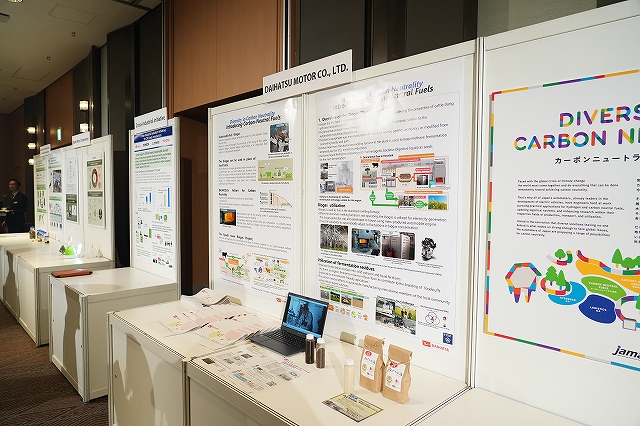
Panels showing initiatives taken by Japanese companies regarding sustainable fuels, hydrogen and ammonia
Participants keenly listening to a presentation
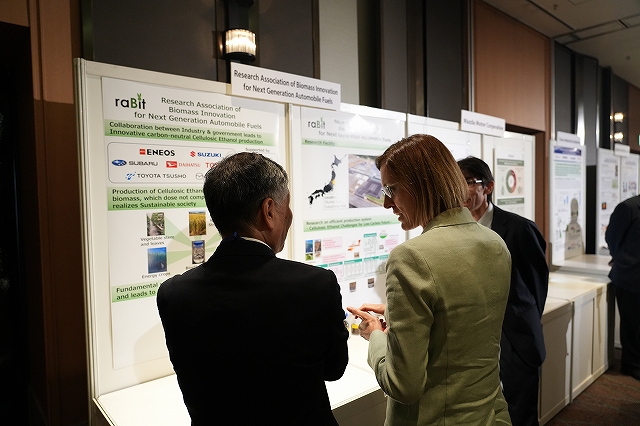
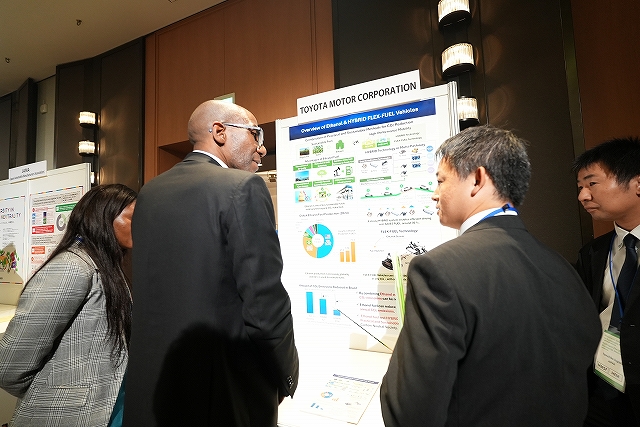
Participants gathering and talking in front of presentation panels at the meeting and lunch venues
During the lunch break, food cooked with hydrogen as a fuel was served to demonstrate the potential of this power source. The world’s first hydrogen stove, sold by H2&DX Inc., burns hydrogen and generates steam that bakes the food. It demonstrated that locally raised chicken cooked on a hydrogen stove was juicier with more moisture and flavor contained inside than that cooked on a conventional gas stove. Tasting of chicken meat cooked on two different stoves was provided.
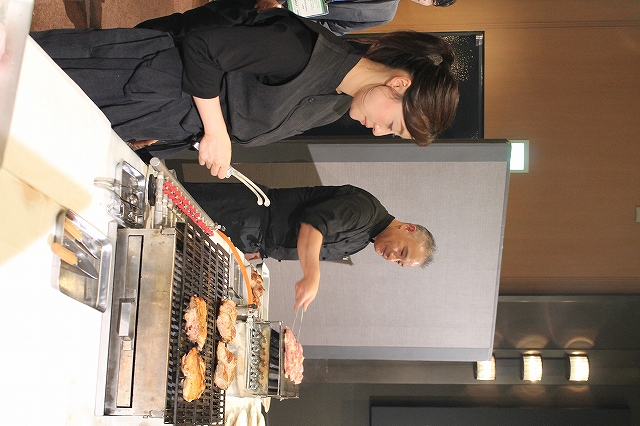
Front: Hydrogen stove
Back: Conventional gas stove
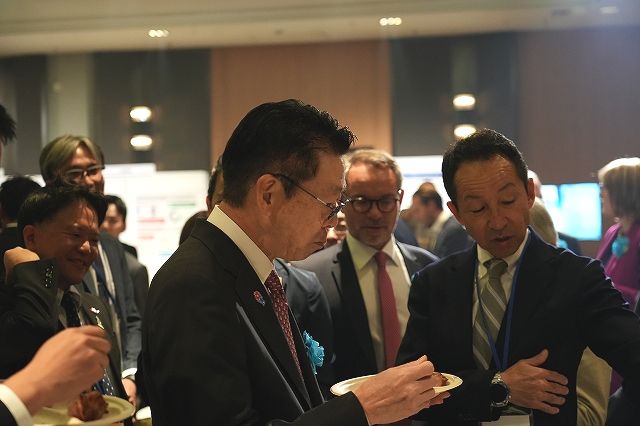
Mr. Muto, Minister of Economy, Trade and Industry, tasting chicken cooked on a hydrogen stove
Hydrogen-roasted coffee was also served. It was produced by UCC Ueshima Coffee using green hydrogen. According to the company, hydrogen roasting enables finer temperature control and a wider range of variations in roasting than conventional roasting with city gas, thereby offering the joy of tasting an especially fruity flavor.
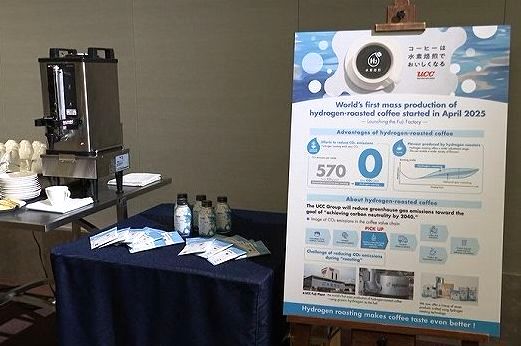
Panel explaining hydrogen-roasted coffee

Coffee server for hydrogen-roasted coffee
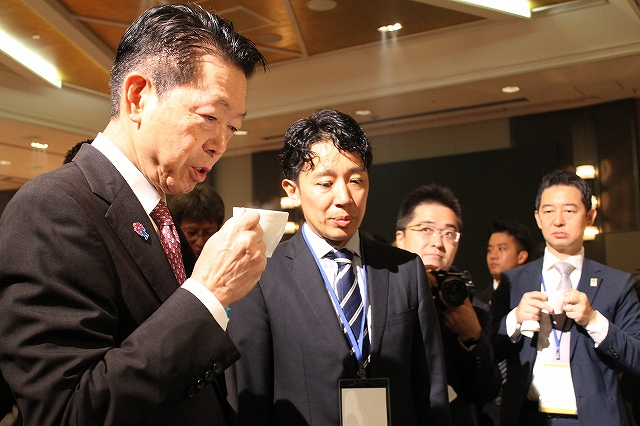
Mr. Muto, Minister of Economy, Trade and Industry, listening to the explanation about hydrogen-roasted coffee

A participant chatting over a cup of coffee
Delegates listened to presentations made by the companies about the potential of hydrogen cooking while enjoying chicken and coffee.
Part 2 of this article will present salient points of the outcome of the Ministerial Meeting on Sustainable Fuels as well as details of the Expo site visit conducted after the meetings.
Divisions in Charge
About this article
Fuel Supply Infrastructure Policy Division, Natural Resources and Fuel Department, ANRE
Hydrogen and Ammonia Division, Energy Efficiency and Renewable Energy Department, ANRE
International Affairs Division, Commissioner’s Secretariat, ANRE
About the Special Contents
Research and Public Relations Office, Commissioner’s Secretariat, ANRE
 The original Japanese text of this article; Click here